
Niladri Dhar, Assistant Professor, Tata Institute of Social Sciences (Tuljapur campus) presented a seminar titled “Database on Labour and Employment in India,” on August 11, 2016, at the office of the Foundation.
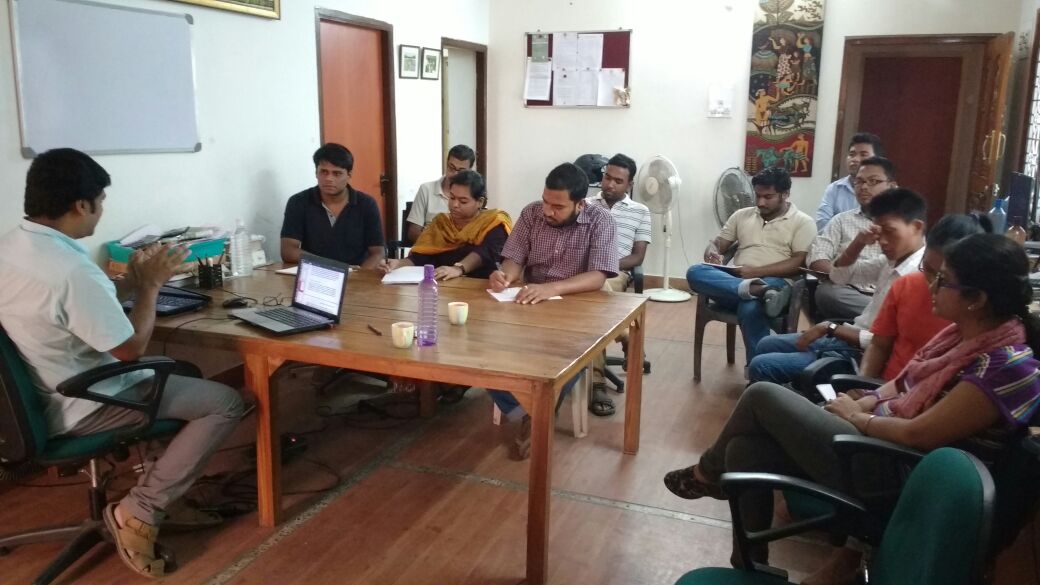
Dr. Dhar introduced the concepts of work and the worker, and charted their evolution in the literature on economics. He then went on to explain how economics has tried to conceptualise and measure the idea of work as a stock and a flow concept. He emphasised the importance of the latter in the context of a developing economy where underemployment is rampant.
The next section of the presentation dealt specifically with India. The speaker discussed the three data sources on work and employment in India, the National Sample Survey Office (NSSO), Census Survey (worker and non-worker data), and the Rural Labour Enquiry published by the Labour Bureau. He also mentioned the Report on Employment-Unemployment Survey, published by the Labour Bureau, which uses the NSSO methodology to collect data.
The presentation was followed by a lively discussion on the limitations of these macro-level databases. Dr Dhar concluded by saying that, despite various limitations of such databases, which often overestimate the number of days of employment per worker, his opinion was that the methodology of these surveys is sound and has stood the test of time. Its contribution to the understanding of concepts like poverty, employment, and unemployment in the country is immense. Although such macro-level surveys often overlook the variations that in some sense define the Indian economy (especially the rural economy and the unorganised sector), their significance, given the size of our economy, cannot be wished away.
